
What a good day program looks like

From the outside, most day programs looks much the same. There's a list of activities, a timetable, maybe a photo of people in the park. But an activity list doesn't tell you whether the day is doing anyone any good. Here's what you should look for instead.
Isn't a busy day a good day?
Many families have a quiet worry about day programs - is my son or daughter actually getting something out of this, or are they just being minded? If you've wondered that, it's a reasonable question.
Part of the problem is that some programs run the same timetable for month's, sometimes years. Bowling on Tuesday, a drive on Thursday, the same as the last five months. Nobody asks whether anyone stills wants to do it. Would you want your own activities identical month after month?
A full timetable and a good day are different things. A good day are different things. A good day is measured by what someone chose, tried and got a little better at.
Why structure and choice work together
A good day program needs both, as structure and choice each make the other work better.
Structure lowers stress. When people know how the day starts, who'll be there and roughly what comes next, they have more energy left for trying something new.
Choice is what makes the day theirs. People are more likely to join in, and keep joining in, when they helped pick the activity.
Real places matter too. Practising a coffee order in a role-play is useful. Ordering one at an actual cafe, with a queue and a real person behind the counter, is the skill itself. Skills learned in the places people actually use are the ones that carry over into everyday life.
What this looks at The Good Life Club
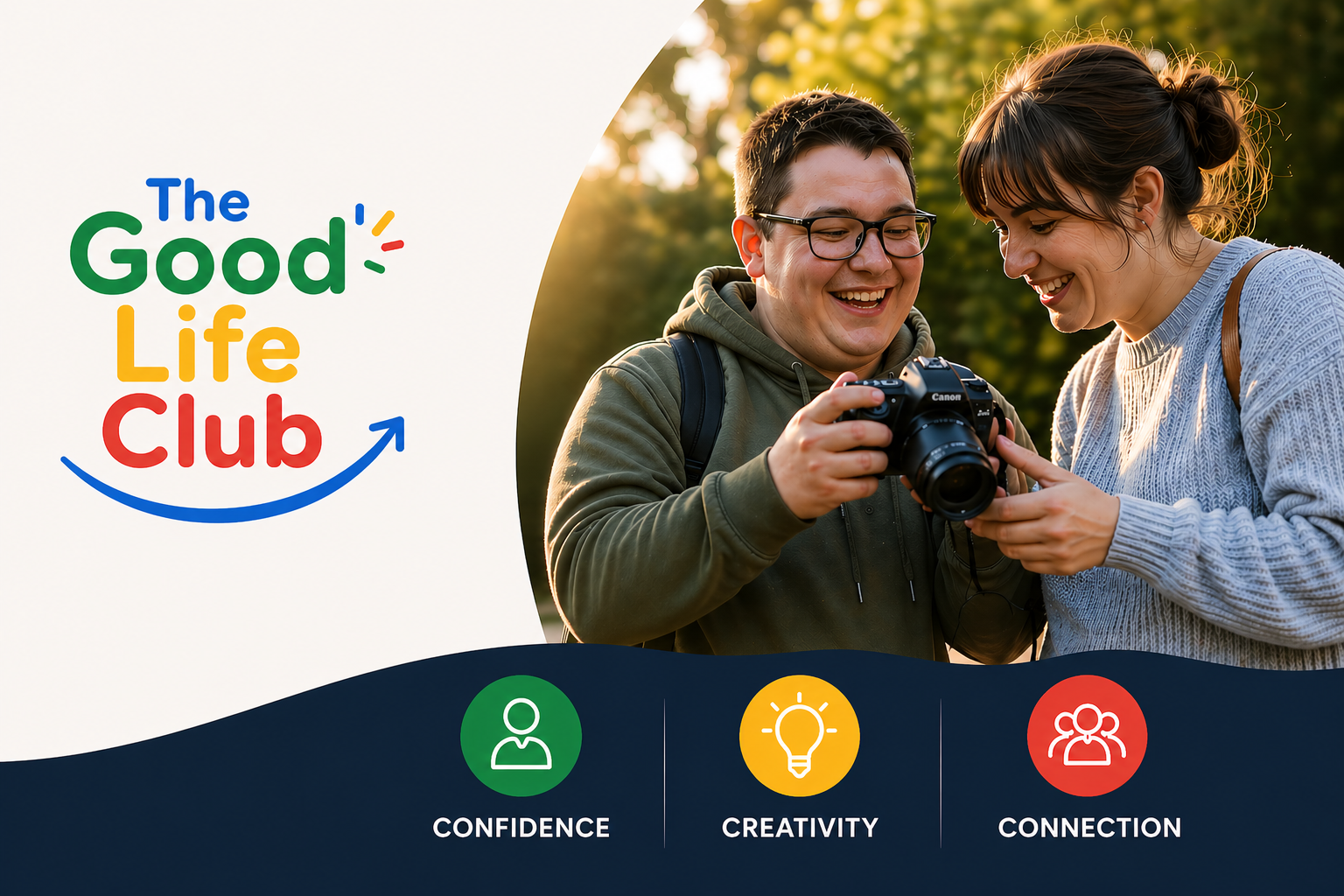
The Good Life Club is
HavenDoor's Community Participation program in Orange. It's built around six Activity Streams, so there's variety and each activity has a clear purpose:
- StoryLab - Photography, podcasting and art, for self-expression and confidence.
- Life Ready Quests - meal planning, shopping and volunteering, for everyday independence.
- Confidence Studio - grooming, style and conversation, for self-esteem and social confidence.
- Community Creators - gardening, baking and group projects, for friendships and teamwork.
- MoveWell - accessible movement like walking groups and swimming, for health, routine and mood.
- Adventure Days - supported outings around the Central West, for exploring and joy.
On the surface, a day might be a few hours in the community garden. Underneath, someone is deciding which seedings go in, someone is working out how much water each bed needs, and two people who've barely spoken are sharing a job.
Signs a day is working
You don't need to be there to tell whether a day program is doing its job. Here are some things to notice that evening, or over the following weeks:
- They talk about the day without being asked.
- They mention someone by name, a worker or someone from the group.
- They want to go back.
- They try something at home they practised out in the community, like paying at the counter or packing their own bag.
- They're tired in a good way, not drained or on edge.
And some questions worth asking any day program, including ours:
- How often do the activities change, and who gets a say?
- Will the same staff be there most weeks?
- How will you let us know how things are going?
- What happens on a hard day?
Not every day, and not for everyone
Some people do best with a quiet, predictable day, and that's a good choice too. A good program should be able to offer that, not just the busy option. No single program suits everyone.
HavenDoor is overseen by Mental Health Nurses, but we're not your treating team. For advice about your own situation, talk to your GP or treating clinician.
Where to start
Good days add up in small ways: a coffee ordered without help, a new friend's name remembered, a Thursday someone looks forward to. There’s no reason to accept life on repeat.
The Good Life Club runs in Orange. To talk about whether it could suit you or someone you support, call us on 1800 97 85 85. You’re more than welcome to have a couple of trial sessions to see if it’s what you’re looking for
Latest Posts