
The Day the Pressure Lifted: What Happened When Support Actually Worked
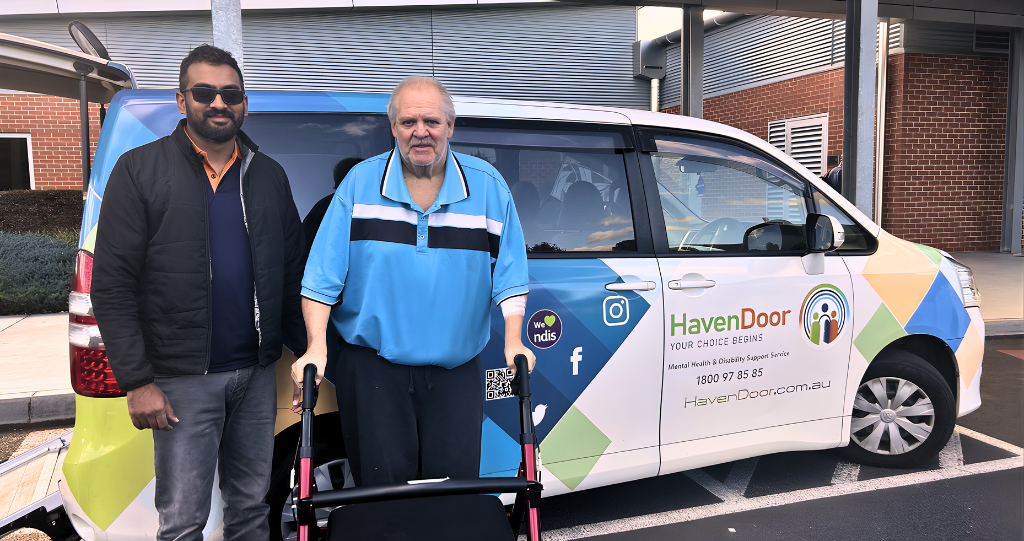
Before the support was in place, dialysis days didn’t just affect Stuart – they shaped the rhythm, stress, and decisions of the entire household.
His wife couldn’t plan her day. She was driving back and forth, waiting for hours, juggling responsibilities at home, and carrying the constant worry of whether Stuart would be safe getting himself there and back. Now, things are different.
“She doesn’t have to wait around… it’s taken a lot off her mind,” said Stuart.
There’s more breathing room in the house. Less pressure. Less rushing. More certainty.
That shift didn’t come from a big, dramatic change. It came from putting the right support around a situation that had quietly become unsustainable.
When ‘Managing’ Isn’t the Same as Safe
Stuart had always been independent. Even with regular dialysis three times a week, he continued driving himself.
It worked… but it was getting harder.
“I can still drive… but my balance isn’t great. Getting in and out of the car is a bit of a chore.”
Dialysis is unpredictable. Finish times shift. Energy levels drop. Blood pressure fluctuates. Some days, the drive home wasn’t just tiring – it carried real risk.
“If I didn’t have this, I’d have to take the risk and drive.”
Like many people, Stuart kept going because he could. Not because it was the safest or most sustainable option.
The Pressure Families Carry (but rarely say out loud)
While Stuart was focused on maintaining independence, the load was building elsewhere.
His wife was filling the gaps – long waits, return trips, disrupted days – on top of managing a busy household and children.
“She can’t wait around for six hours… she has to go home and then come back again.”
This is often where families sit: holding everything together, quietly absorbing the logistical and emotional strain.
Not because it’s easy. Because there’s no alternative that feels right.
Introducing Support Without Losing Dignity
When they engaged HavenDoor, the goal wasn’t just to “solve transport.”
It was to create something safer, more reliable, and less stressful – for both Stuart and his family.
What made the difference wasn’t complicated.
It was consistency. It was flexibility. And it was how the support was delivered.
What Actually Changed Day to Day
Flexibility has to fit real life. Dialysis doesn’t run on a fixed schedule. Finish times shift.
“The end time is variable… sometimes 2:30, sometimes 3:30.”
Instead of trying to force predictability, the support adapts.
“I just send a text – ‘Can you pick me up at 2:30?’ ‘Yep. No worries’.”
That simple responsiveness removes friction – for both the participant and the family.
Reliability that builds trust
“In six months, there’s barely been an issue with timing.”
For someone leaving a medical treatment, consistency matters. It reduces stress. It builds confidence. It allows families to plan again.
Care that feels human, not clinical
“One day I nearly fell getting in the door … [my driver] he grabbed me, made sure I was safe.”
“They always ask – ‘Are you alright to get inside?’”
These aren’t processes. They’re humans being considerate.
And for someone adjusting to receiving support, that distinction matters.
It doesn’t feel like losing independence. It feels like being respected.
The Outcome That Matters Most
When Stuart talks about what’s changed, he doesn’t focus on convenience.
He talks about his wife. “It takes the pressure off my wife completely.”
Now:
- “She’s not waiting around for hours”
- “She’s not driving back and forth”
- “She can focus on the children”
- and she has space to step away when needed
The support didn’t just help Stuart. It stabilised the household.
Rethinking Independence
At first, accepting help was difficult.
“At first it was hard… I’ve been independent all my life.”
But over time, that definition shifted.
“Well… it definitely outweighs the bad.”
Because independence isn’t just about doing everything yourself.
It’s about:
- Being safe
- Reducing risk
- Protecting the people around you
Having support that works with you, not around you
A Simple Measure of Trust
“Out of ten? I’d give them nine and a half.”
“You couldn’t ask for better blokes.”
No exaggeration. No salesmen.
Just a family under less pressure – and a system that finally works.
Latest Posts