
Supporting Someone With PTSD: A Practical Guide for Families and Carers
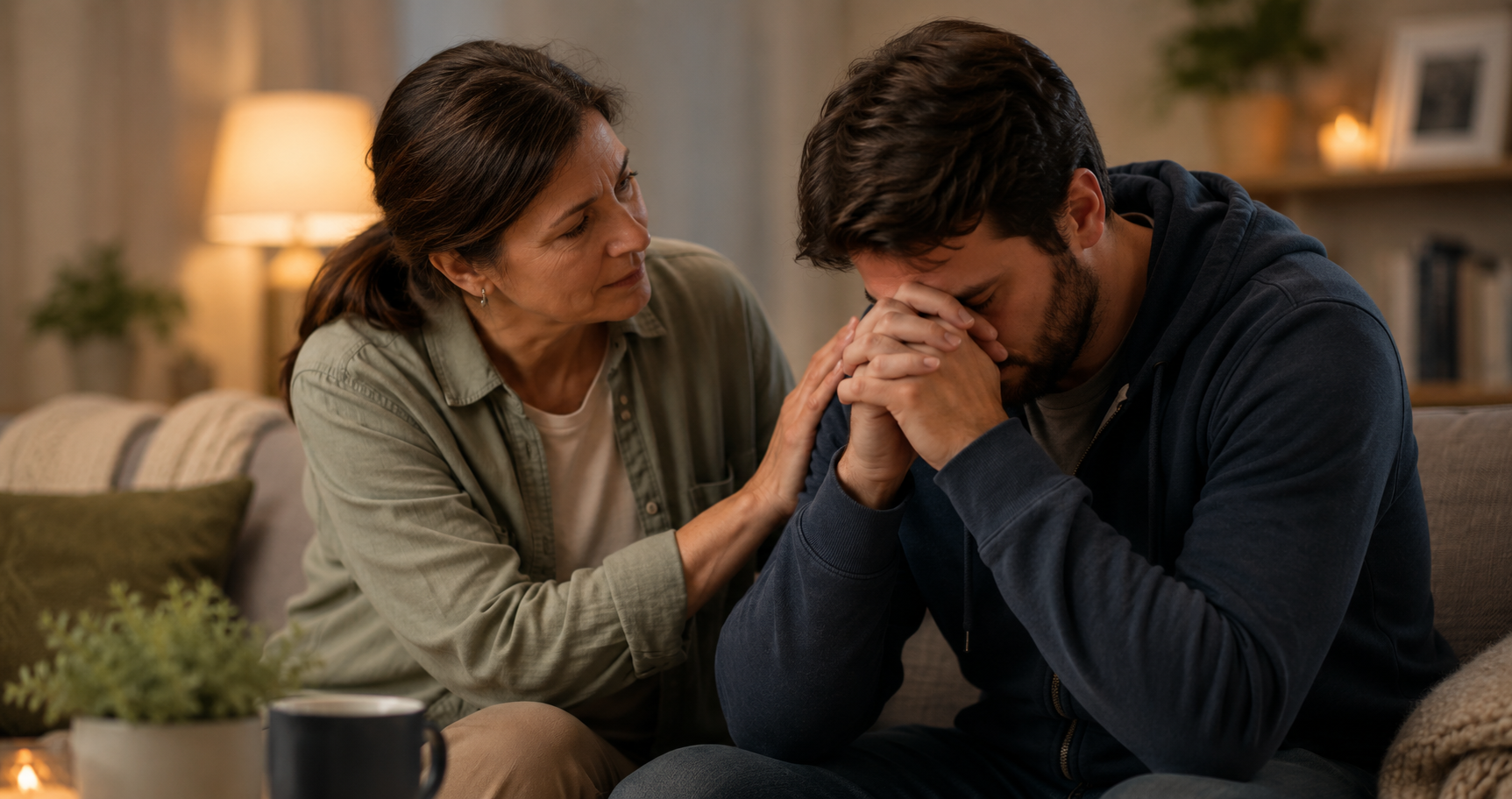
When a parent watches their adult child flinch at a slammed door, lie awake night after night, or quietly pull away from the people they love, it is frightening and confusing. You want to help, but you are not always sure how, and you worry about saying the wrong thing. If this sounds familiar, you are not alone, and there is more you can do than you might think.
Understanding PTSD
Post-traumatic stress disorder is a recognised mental health condition that can develop after a person experiences or witnesses a deeply distressing or life-threatening event. It is not a weakness, and it is not something a person can simply decide to get over. The fear response that kept them safe during the trauma stays switched on long after the danger has passed.
PTSD tends to show up in a few overlapping ways: reliving the event through flashbacks or nightmares, avoiding the people and places that bring it back, feeling constantly on edge or easily startled, and carrying persistent changes in mood. It is also more common than many people realise. Phoenix Australia estimates that more than a million Australians are living with PTSD at any one time, and around one in ten will experience it at some point in their life. The most important thing to hold onto is that PTSD is treatable, and early support improves recovery.
How to support someone living with PTSD
The most valuable thing you can offer is steady, patient presence. Recovery takes time, and trust is rebuilt slowly. A few approaches make a real difference:
- Listen without judgment, and let the person talk when they are ready rather than pushing them to relive the trauma.
- Learn what tends to trigger their distress, such as certain sounds, places or anniversaries, so you can plan around them together.
- Keep routines calm and predictable, since stability helps a nervous system that is stuck on high alert begin to settle.
- Encourage professional help gently. A GP is a good first step, and you can offer information about services rather than advice about specific treatments.
- Look after yourself too. Supporting someone with PTSD is demanding, and you cannot pour from an empty cup.
You do not need to be the expert. You need to be consistent, kind, and willing to walk alongside them.
How HavenDoor supports clients with PTSD
This is where structured support changes the picture. HavenDoor provides Supported Independent Living (SIL) across Orange and Dubbo, and our approach to PTSD is trauma-informed from the ground up. HavenDoor was co-founded by registered mental health nurses, and our PTSD support is delivered under clinical supervision rather than left to chance.
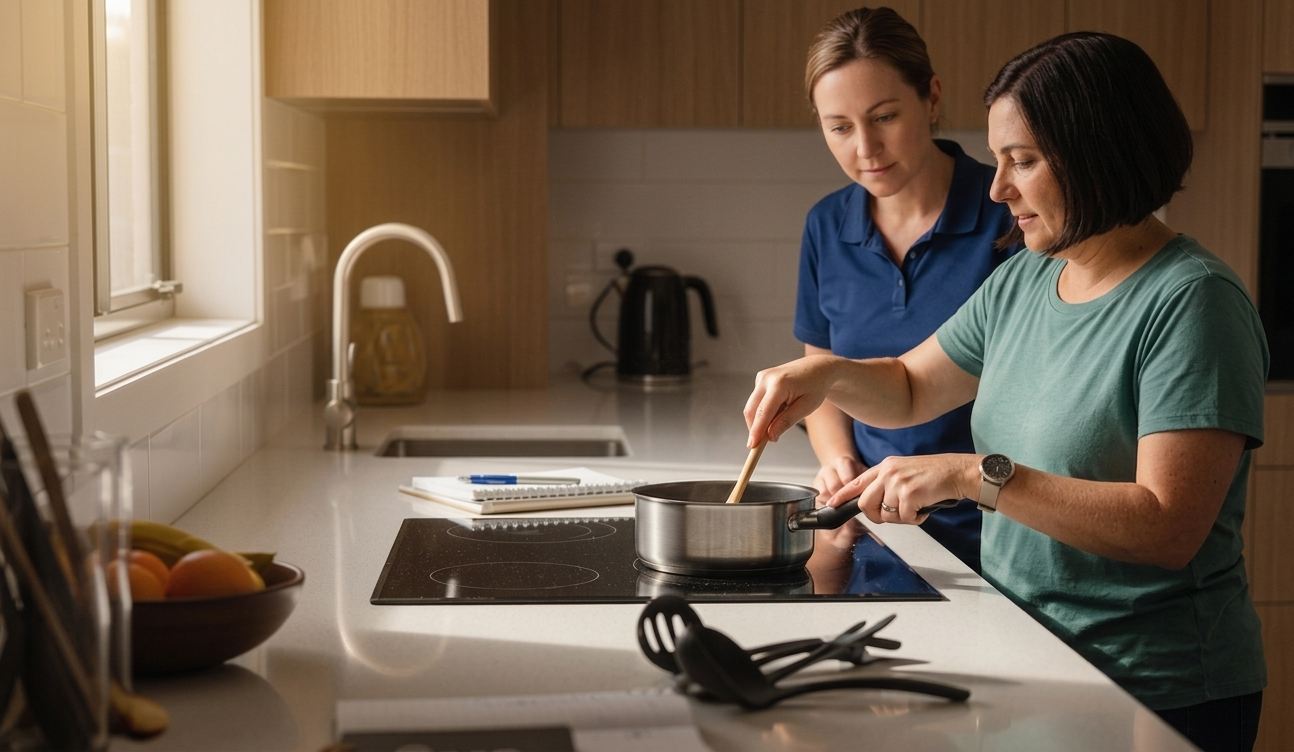
In practice, that means a client’s home is set up to feel genuinely safe, with familiar support workers who turn up consistently so trust can grow. Our team is trained to recognise the signs of distress early, to use grounding and calming techniques when someone is triggered, and to quietly note changes in mood or behaviour so nothing slips through the cracks. They know the escalation pathway if a crisis develops, and they coordinate openly with families, GPs, allied health and support coordinators so everyone is working from the same page. The goal is never just to tick a funding box. It is to help someone move from getting through the day to rebuilding a life they actually want.
What this means for families and coordinators
For families, this is room to breathe. You can step back from being the sole source of support, knowing your loved one is in capable and compassionate hands, and return to being a parent, sibling or partner rather than a full-time carer. For support coordinators and discharge planners, it means a provider who communicates clearly, documents thoroughly, escalates appropriately and works within clinical guidance. That lowers risk and makes a referral something you can stand behind with confidence.
Taking the next step
If you are supporting someone living with PTSD in Central West NSW and wondering whether structured SIL could help, we are glad to talk it through with no pressure. You can reach the HavenDoor team on 1800 97 85 85 or at admin@havendoor.com.au.
If you or someone you care about is in distress right now, support is available. Lifeline is on 13 11 14, Beyond Blue is on 1300 22 4636, and in an emergency always call 000.
Common questions
Can PTSD be cured?
There is no instant fix, but PTSD is very treatable. With the right therapy, support and time, many people recover well and go on to live full lives.
Is PTSD only something veterans experience?
No. Anyone can develop PTSD at any age, after events such as abuse, an accident, medical trauma, assault or the loss of a loved one.
Latest Posts